Written brief
The form on this page is the controlled channel. It keeps data rate, connector, length, and destination in one place.
WRITE TO THE DESK
The short dialog elsewhere on the site is a compact inquiry. This page is the full path: how a QSFP cable note is read, which channels exist, and the form that stores the specification. Bring cage, lane rate, length, quantity, US destination, and timing.
The form on this page is the controlled channel. It keeps data rate, connector, length, and destination in one place.
Answers return to the work email you type. No separate mailbox is published, so there is no second address to guess.
Notes are read on US business days. A timestamp is not a ship date. Lead time stays with the supplier who names the part.
No phone line and no social account are used for quotations. A call would drop AWG, coding, and FEC questions the comparison needs.
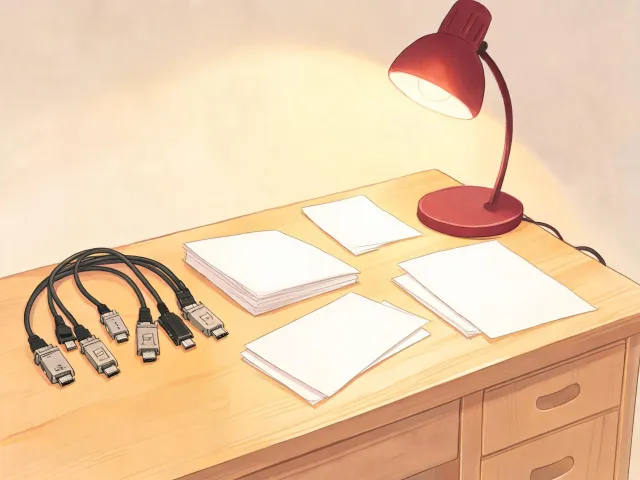
Do not treat a pin on a public map as this desk. The illustration is a review bench, not a street address. An optional budget needs a currency and a per-assembly or whole-order basis. High-end, mid-range, budget, or undecided is a preference, not a verified score, and a live quotation is not required before you write.
QSFP+, QSFP28, QSFP56, or QSFP-DD. Straight or breakout. Meters. AWG if copper. Wavelength, fiber mode, and optical budget if the path is glass. Insertion loss, return loss, impedance, power in watts for active ends, and the temperature band you need confirmed, often discussed as 0 °C to 70 °C until a datasheet replaces it. Quantity and the US dock. If a drawing will not fit, say so in the requirement field. The form has no upload control.
OEM-coded memory can follow a vendor support policy more closely, while a compatible code can widen the plants you ask if that host software accepts the EEPROM. A new assembly can show a clearer warranty path, while a surplus lead can cover a legacy cage when condition is stated. Single-mode glass can suit a longer hall when the module matches the plant, and multimode glass can suit a shorter hall near 850 nm rather than 1310 nm. Those are choices to write down, not results this desk measured. Checked references on 2026-10-27, the ITU-T optical-fibre index and the IEEE 802 overview are question sources. They do not certify the assembly you will buy. Connector mating cycles matter when leads are reseated in test. Leave unknown cells blank rather than guessing. The 100G planner is a checklist you can copy from if that rate is the one in the cage.
QUALIFIED BUSINESS BUYERS
Compare quotations from up to 3 factories after the QSFP cable assembly is written down.
Eligibility applies to qualified business buyers and is confirmed after we review your product, quantity, destination, and sourcing requirements.